
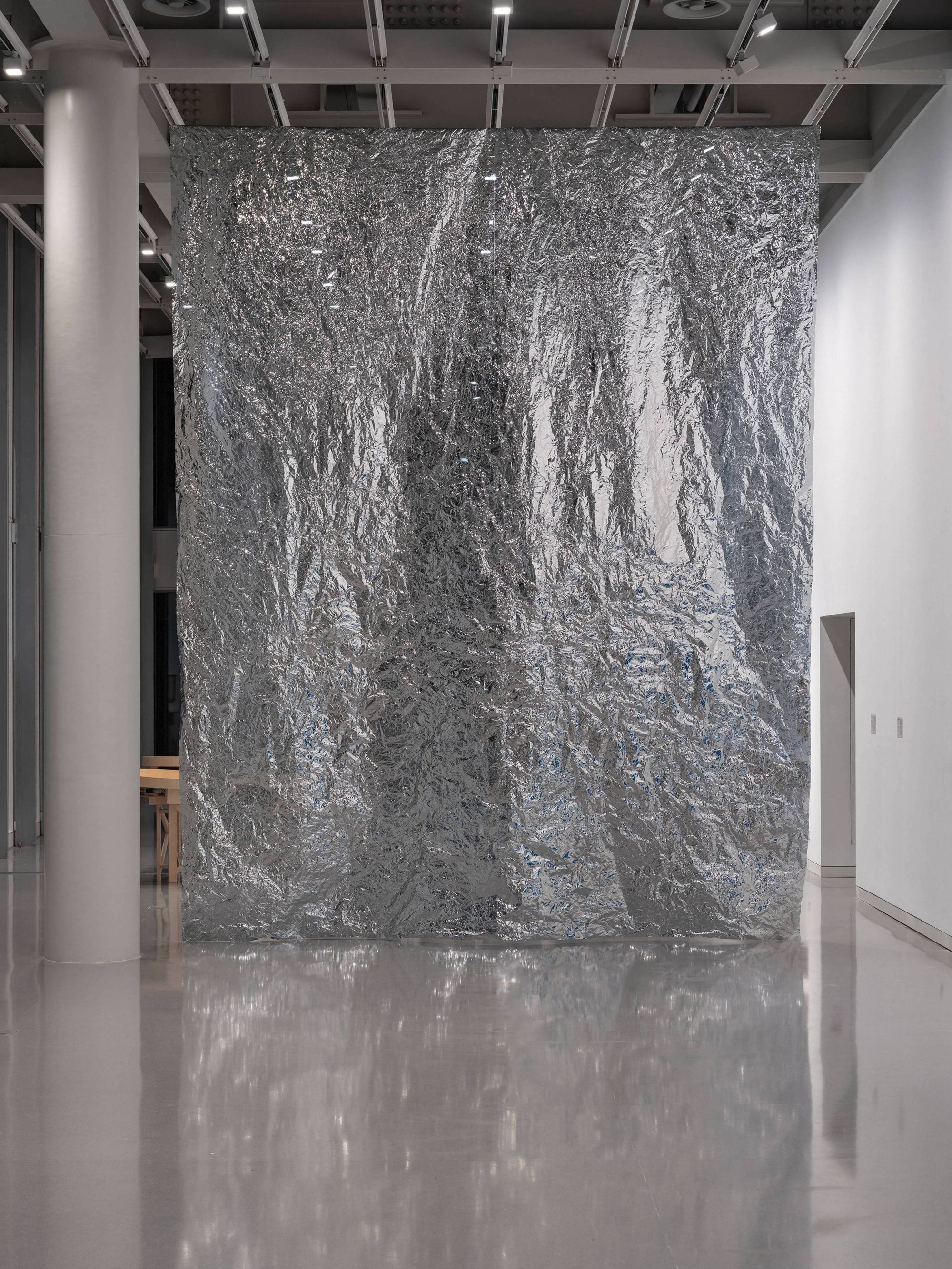
The exhibition title, "Floating Sounds and Resonant Tones," originates from an essay by Shen Yue, a historian and phonologist of the Southern Dynasties, in his "Biography of Xie Lingyun" in the *Book of Song*. Originally, it referred to the importance of harmonious interplay between floating and deep tones in poetry and prose, achieving a melodious and pleasing effect to the ear, in order to be considered a masterpiece. Today, "Floating Sounds and Resonant Tones" is used as a phrase to refer to the tones of the Chinese language. Even though the pronunciation and intonation of contemporary Chinese differ greatly from those of the Southern Dynasties, the close connection between tone and meaning remains a prominent feature that distinguishes Chinese from most other languages in the world. In other words, Chinese is a language that highly values "musicality." Shen Yue also explained the origin of this musicality at the beginning of his essay: since the beginning of human existence, humanity has been touched by the myriad changes in the world, thus creating the need to express and convey emotions. Singing arose from this, and literature flourished within the interplay of song.